

- What Wound Care at Home Involves
- What Clinic-Based Wound Care Involves
- What to Expect During a Home Visit
- Infection Risk: How the Two Compare
- Convenience and Mobility
- Clinical Oversight and Consistency
- Cost Considerations
- When a Clinic Visit Is Still Necessary
- How to Decide What's Right for Your Recovery
Wound care at home in Vancouver has become a common and often preferred alternative to repeat clinic visits after surgery, and for good reason. When a Registered Nurse performs dressing changes and wound assessments in a patient's own home, it can reduce exposure to hospital-acquired infections, cut down on painful and tiring transportation, and allow for more personalized, consistent care from a nurse who comes to know the wound and the patient well.
But home wound care isn't automatically the right choice for every wound or every recovery. This guide compares the two options honestly, including where a clinic still has the advantage, so you can make the safer choice for your specific situation.
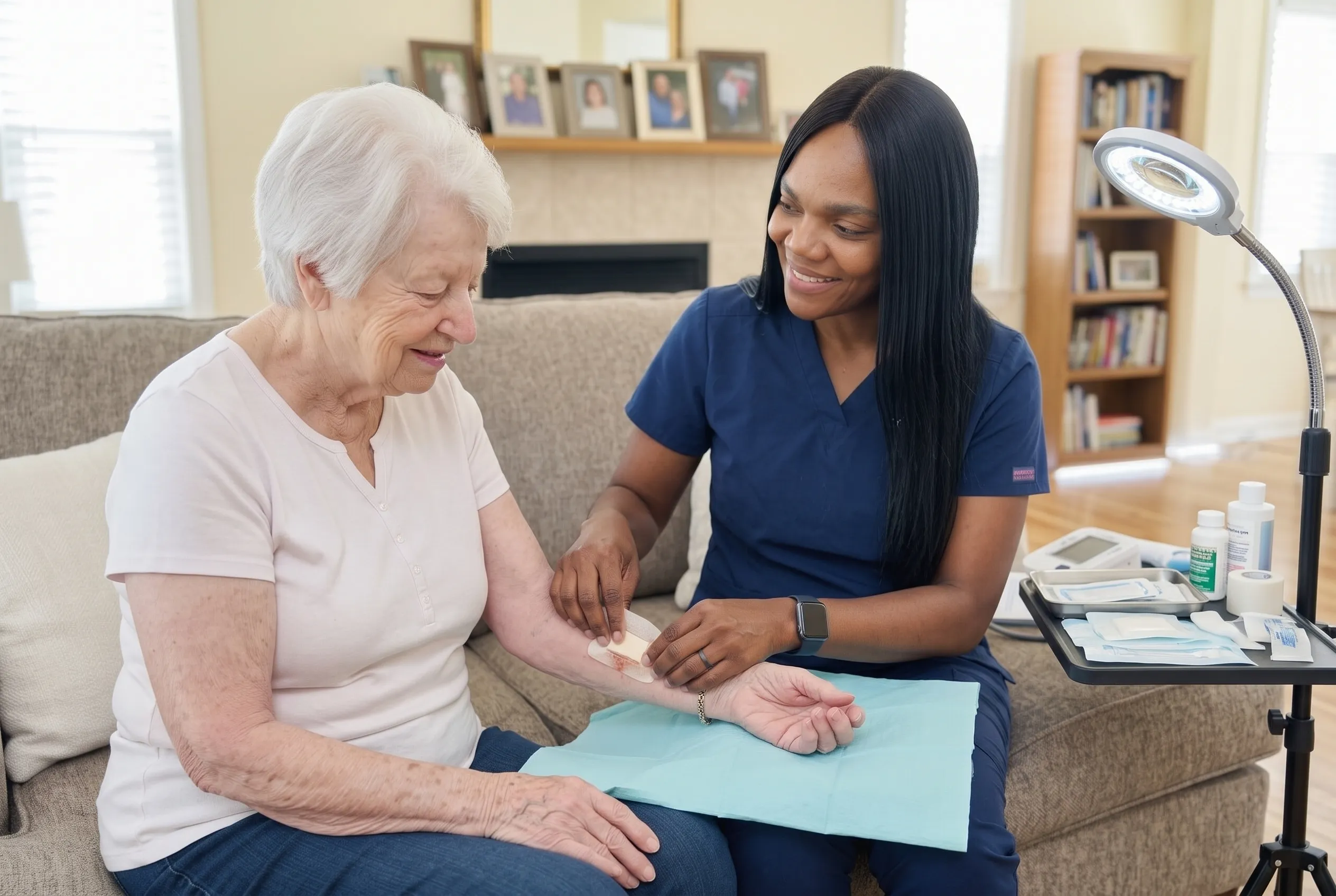
What Wound Care at Home Involves
In-home wound care means a Registered Nurse travels to the patient's residence to clean the wound, change dressings, assess for signs of infection or delayed healing, and document progress, exactly as would happen in a clinic, but in a familiar and typically lower-risk environment. Visits are scheduled around the wound's needs, commonly a few times a week for surgical incisions, and the same nurse often returns for consecutive visits, building a clear picture of how the wound is actually progressing over time.
What Clinic-Based Wound Care Involves
Clinic-based wound care requires the patient, or a caregiver, to travel to a doctor's office, surgical follow-up clinic, or dedicated wound care clinic for each dressing change or check-in. Clinics have the advantage of on-site equipment, easy access to a physician if something needs immediate evaluation, and specialized resources for complex or non-healing wounds, such as advanced debridement or negative pressure wound therapy.
What to Expect During a Home Visit
A typical home wound care visit follows the same clinical steps a nurse would take in a clinic exam room. The nurse washes and sanitizes their hands before touching any supplies, removes the old dressing, and inspects the wound bed, the surrounding skin, and any drainage before cleaning it according to the surgeon's instructions. They measure the wound if needed to track healing progress over time, apply a fresh dressing, and document their findings so there's a consistent clinical record from visit to visit, not just a verbal impression.
Most nurses bring their own sterile supplies and set up a clean workspace on a towel or tray rather than assuming the home environment is ready. Family members are welcome to be present, and a good nurse will use the visit as a teaching opportunity, showing you what a normal healing wound looks like so you have a clearer sense of what to watch for between visits.
Infection Risk: How the Two Compare
One of the most cited advantages of home-based wound care is reduced exposure to other patients and the pathogens that circulate through any busy healthcare setting. A wound is essentially an open door for infection, and every additional trip through a waiting room, elevator, or parking garage is an additional opportunity for exposure, particularly during cold and flu season.
That said, infection risk at home depends entirely on technique. A nurse trained in sterile or clean dressing-change protocols will maintain the same clinical standard at a kitchen table that they would in an exam room. The risk isn't eliminated by being at home, it's managed differently, through careful hand hygiene, proper supply handling, and a nurse who knows exactly what a healthy healing wound should look like versus one that is starting to turn.
Whichever option you choose, never use hydrogen peroxide, rubbing alcohol, or iodine directly on a healing surgical wound unless a clinician specifically instructs it. These can damage healthy new tissue and slow healing rather than speed it up.
Convenience and Mobility
For patients recovering from surgery, especially orthopedic, abdominal, or cardiac procedures, the physical toll of getting dressed, transported, and moved through a clinic multiple times a week can be significant. Pain, fatigue, and reduced mobility all make travel harder precisely when the body needs to rest and heal. Home visits remove that burden entirely, and also reduce the logistical strain on family members who would otherwise need to arrange transportation and take time off work for each appointment.
Clinical Oversight and Consistency
Continuity matters in wound healing. A patient who sees a different clinician at every clinic visit may get inconsistent opinions about how the wound is progressing. With home wound care from a dedicated nurse, the same clinician typically follows the wound from visit to visit, which makes it far easier to catch a subtle change, like slightly increased redness or a new odor, that might otherwise be missed by someone seeing the wound for the first time.
Cost Considerations
Cost comparisons vary by individual circumstances, insurance coverage, and how many visits are required, so it's worth discussing directly with your care provider rather than assuming one option is automatically cheaper. Factor in not just the visit fee itself, but the real cost of transportation, missed work for a family caregiver, and the value of a faster, complication-free recovery.
It's also worth considering the frequency of visits your wound realistically needs. A wound requiring frequent dressing changes over several weeks can add up quickly in clinic parking, gas, or transit fares, whereas a home visit consolidates all of that into a single appointment. Ask your provider for a realistic estimate of how many visits your specific wound is likely to need before comparing the two options on cost alone.
When a Clinic Visit Is Still Necessary
Home wound care is not a replacement for clinical evaluation when something is genuinely wrong. A clinic or emergency visit is still the right call for a wound that appears to be opening, significant new drainage, a fever, a wound that isn't improving after a couple of weeks, or any concern that needs imaging, lab work, or a surgeon's direct assessment. A good home wound care nurse will tell you clearly, and quickly, when it's time to escalate rather than trying to manage everything at home.
How to Decide What's Right for Your Recovery
Consider the complexity of the wound, your mobility, whether you live alone, and what your surgeon recommends for follow-up. Straightforward surgical incisions healing as expected are often excellent candidates for home-based care paired with scheduled post-operative care check-ins. Complex, non-healing, or high-risk wounds may need more frequent clinical oversight, at least until they stabilize. Many families find that starting with a professional assessment, rather than guessing, is the fastest way to land on the right plan.
It's also reasonable to change your mind partway through recovery. If a wound at home starts healing more slowly than expected, or a family caregiver feels less confident managing it than anticipated, switching to more frequent nursing visits or a clinic check-in is a normal adjustment, not a sign anything was done wrong.
Frequently Asked Questions
Yes, for most surgical wounds, when a trained nurse performs the dressing changes. Home wound care also reduces exposure to other patients and infections common in busy clinic waiting rooms.
It depends on the wound and your surgeon's instructions, but many post-surgical patients are seen roughly twice a week by a home nurse until the wound is stable and healing well.
Clinics are better suited for wounds needing specialized equipment, imaging, or a surgeon's direct evaluation, such as suspected deep infection, wound breakdown, or complications requiring a procedure.
Watch for increasing redness or warmth, swelling, pain that worsens instead of improves, pus or foul-smelling drainage, or a fever. Contact your care team or doctor promptly if these appear.
Risper Murunga, RN, BSN, MPH
Risper is the Clinical Director and Lead Registered Nurse at OnPoint Nurse & Home Care, bringing over 20 years of clinical care and healthcare leadership experience to families across Metro Vancouver.