When Seconds Matter: Trained Clinical Eyes in the Home
For frail seniors living at home, medical emergencies can happen without warning: sudden choking, acute breathlessness, transient ischemic attacks (TIAs), sudden falls with head impact, or severe diabetic hypoglycemic drops. In these urgent moments, having a trained, composed healthcare professional at the bedside is life-saving.
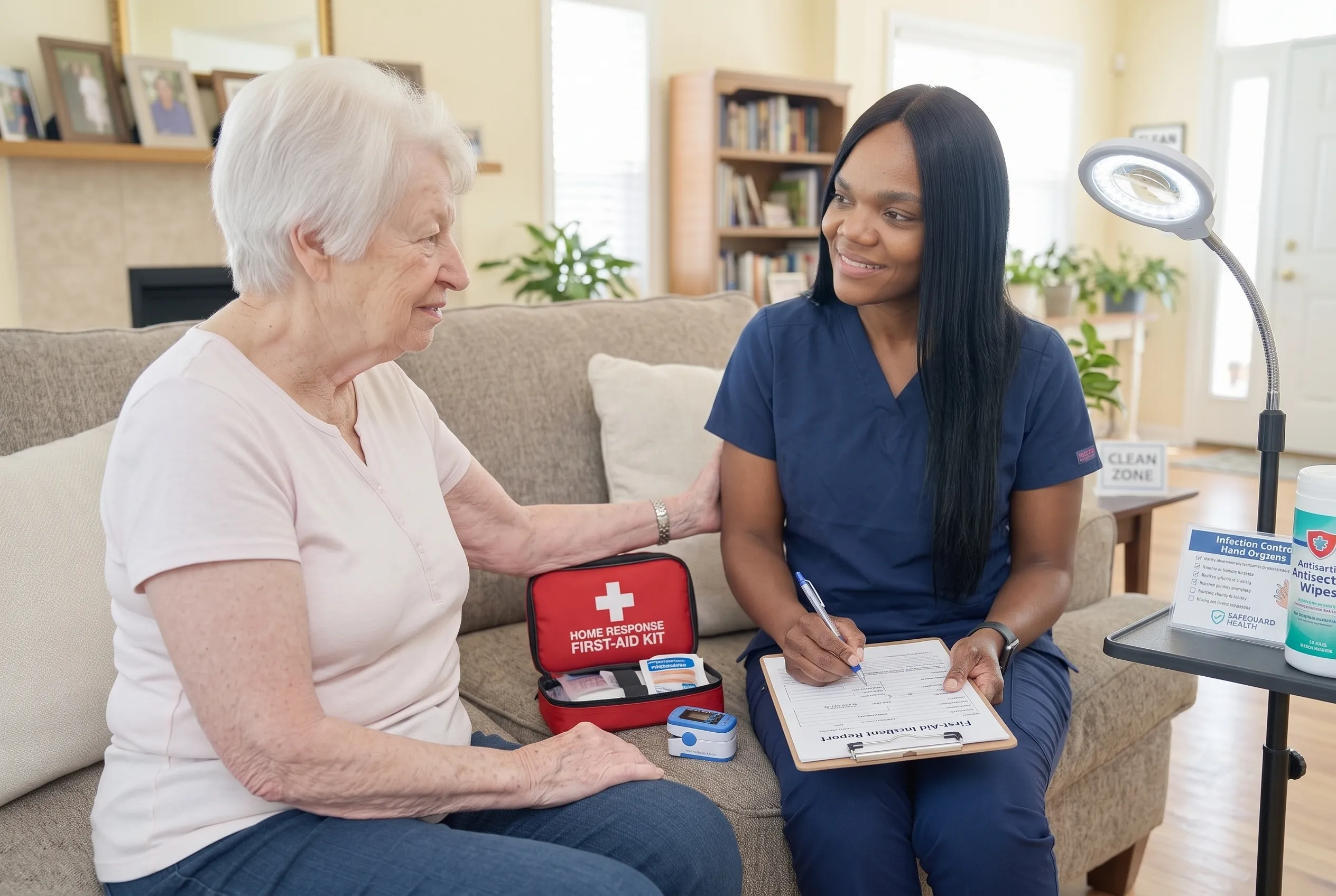
Every OnPoint caregiver and nurse is rigorously trained in certified CPR, Standard First-Aid, acute choking relief, and clinical emergency escalation protocols. We know how to stabilize vitals, initiate immediate emergency dispatch (911), prepare comprehensive medical summaries for arriving paramedics, and provide calm reassurance to terrified family members.
"In a crisis, panic is the enemy of recovery. Our clinical training ensures immediate, calm, and decisive emergency management."
Acute Situations Managed by Our First-Aid Protocols
Immediate on-site intervention while coordinating with emergency medical services:
Choking & Airway Obstruction
Immediate Heimlich maneuver, airway positioning, and suctioning protocols for seniors with dysphagia and aspiration risks.
Unwitnessed Falls & Head Trauma
Immobilization protocols, pupil reaction screening, neuro checks, and vital monitoring following an acute slip or impact.
Acute Cardiac & Stroke Signs
Rapid FAST stroke assessment (Face, Arms, Speech, Time), immediate 911 activation, and vital stabilization.
Diabetic Crises & Severe Hypoglycemia
Rapid blood glucose testing, fast-acting oral glucose administration, or physician-directed emergency interventions.
Our Standardized Emergency Response System
A structured clinical safety chain executed without delay.
Immediate Clinical Triage & First-Aid Intervention
The moment an acute event occurs, our staff perform primary ABC triage (Airway, Breathing, Circulation), apply pressure to acute lacerations, reposition for respiratory comfort, or commence CPR.
- Immediate CPR / AED deployment protocols where indicated
- Recovery positioning and airway clearance
- Direct pressure and sterile dressings for hemorrhage or skin tears
- Continuous oxygen delivery titration under standing orders
Rapid 911 Paramedic Dispatch & Door Navigation
Our caregiver contacts 911 immediately, conveys clear clinical observations to the emergency dispatcher, unlocks entrances, secures family pets, and directs paramedics straight to the client.
- Precise clinical reporting of vitals and symptoms to 911 dispatch
- Clearing physical obstacles for stretcher and paramedic access
- Illuminating home exterior for rapid ambulance identification
- Continuous bedside monitoring until paramedics take over
Paramedic Emergency Handover Summary
In emergency rooms, minutes spent hunting for medical histories cost vital care. Our nurses compile and hand paramedics an updated Emergency Medical Folder containing complete diagnostic context.
- Current typed medication list, dosages, and pharmacy contact
- Known drug allergies, pacemaker status, and chronic diagnoses
- Advance Care Directives (DNR / MOST forms)
- Detailed baseline vital recordings and timeline of acute symptoms
Immediate Family Crisis Notification
We contact primary and secondary family designated contacts immediately with calm, factual, and reassuring communication, informing them which hospital receiving ward the client is being transported to.
- Direct phone calls to primary family caregivers
- Clear explanation of the acute event and hospital destination
- Locking and securing the residence if the family meets at the hospital
- Follow-up coordination with hospital emergency social workers
"Having an experienced clinical presence in the house transforms a chaotic medical emergency into a controlled, life-saving response."
Four Tenets of Emergency Readiness
Rapid Triage
Instantaneous clinical evaluation of airway, neurological state, and vital stability.
Paramedic Packets
Up-to-date medication lists, allergies, and MOST advance directives ready at a moment's notice.
Family Alerts
Immediate, factual communication to family members with zero unnecessary delay.
CPR Certified
Every nurse and care aide is certified in BLS, CPR-C, and senior emergency first-aid.
Standard Emergency Readiness Features
Included as standard across all OnPoint nursing and home care shifts.
Standard Protocols Included in Every Care Plan:
Common Questions About Emergency Response
No. In immediate life-threatening situations (severe chest pain, active stroke symptoms, sudden unconsciousness), emergency services (911 / BC Emergency Health Services) must always be dialed first. Our caregivers and nurses provide immediate on-site CPR/First-Aid, initiate 911 dispatch, coordinate medical handovers, and support the family.
All OnPoint caregivers and registered nurses maintain current CPR-C / BLS certification, Standard First-Aid for older adults, airway obstruction training, and acute clinical triage protocols.
Our staff follow strict clinical escalation algorithms: immediate vital sign assessment, emergency positioning, rapid escalation to our on-call nursing supervisor, contacting 911 when indicated, and immediate notification of the family.
When paramedics arrive, our nurse prepares a concise clinical summary document containing current medications, allergy lists, baseline vitals, advance directives, and a chronological summary of the acute event for the receiving emergency physician.
Ensure Your Loved One Has Trained Clinical Support
Book a consultation with our nursing leadership to establish emergency-ready home care.