
Care That Changes Its Goal
Palliative care is not giving up. It is care that changes what it is aiming at — from adding time to protecting comfort, dignity and the quality of whatever time remains.
Most people, asked where they would want to be, say home. Making that possible takes practical clinical support: symptoms managed properly, pain relief given on time, the equipment in place, and someone experienced who can tell a frightened family what is normal and what is not.
It also takes patience with the family. The questions asked at two in the morning are rarely clinical ones. Our nurses are used to sitting with those, and to saying plainly what is happening rather than retreating into vagueness.
Nobody should have to guess their way through this. Part of our job is simply telling families what to expect.
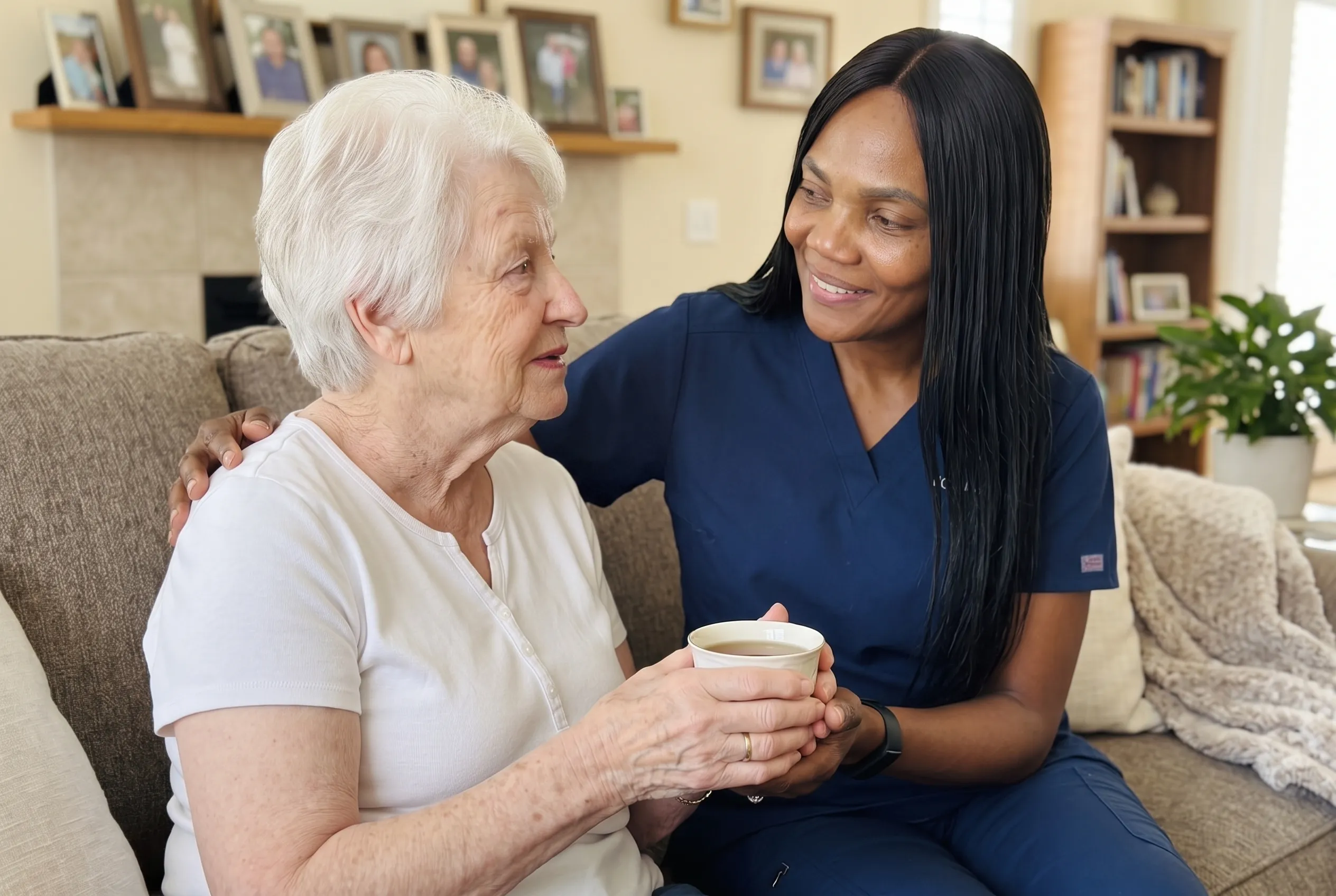
When Families Contact Us About Palliative Support
There is no single right moment, and it is almost always earlier than families think.
The goal of treatment has changed
Where care is now aimed at comfort and quality of life rather than cure, and the practical support at home needs to change with it.
Symptoms are becoming difficult to manage
Pain, breathlessness, nausea or agitation that a family cannot manage confidently on their own, particularly overnight.
The wish is to remain at home
Most people, asked, say they would rather be at home. Making that realistic usually requires nursing support to be in place.
Personal care has become difficult
Where washing, dressing and continence care have become physically hard, or where the person finds family assistance with them distressing.
The family is exhausted or frightened
Carers who have not slept properly for weeks, or who are terrified of what happens next because nobody has told them plainly.
Nobody has explained what to expect
One of the most valuable things we do is tell families honestly what is likely to happen and when to call.
What Palliative Care at Home Actually Involves
Palliative nursing has two clients: the person being cared for, and the family around them. Both are part of the plan.
Pain and Symptom Management
Comfort is the first priority and the one everything else depends on. Pain that is not controlled overshadows everything — it prevents rest, prevents conversation, and is the thing families most fear witnessing.
Our nurses assess pain and other symptoms systematically rather than by impression, administer the prescribed regimen, and give the palliative or prescribing team real information when medication needs adjusting. Symptoms beyond pain matter just as much: breathlessness, nausea, agitation, restlessness, dry mouth, constipation.
Assessment continues throughout, because needs in palliative care change quickly and a regimen that was right last week may not be right today.
- Systematic pain assessment and scoring
- Administration of prescribed comfort medication
- Breathlessness and respiratory distress management
- Nausea, appetite and bowel symptom care
- Agitation and restlessness support
- Prompt liaison with prescribers for adjustment
Personal Care With Dignity
Washing, dressing, continence care and mouth care become harder as illness progresses, and they are frequently the aspect people find hardest to accept help with.
How this is done matters as much as that it is done. Unhurried. Privately. Explaining before doing. Asking rather than instructing. Preserving as much of the person's own choice and modesty as their condition allows.
For many families there is also relief in handing this over — being able to be a daughter or a husband again rather than the person who does the difficult and intimate tasks.
- Gentle, unhurried personal hygiene support
- Continence care with privacy preserved
- Mouth care and hydration comfort
- Repositioning for comfort and pressure relief
- Dressing and grooming as the person prefers
- Care delivered at the person's own pace
Comfort Measures and Skin Care
As mobility reduces, small physical measures become disproportionately important to comfort. Regular repositioning prevents pressure injuries that would cause real suffering. Mouth care relieves the dryness that is one of the most common sources of distress. Careful positioning eases breathlessness.
These are unglamorous nursing tasks, and they are among the things that most reliably improve how someone's days feel.
- Regular repositioning for comfort and pressure relief
- Pressure injury prevention and management
- Frequent mouth and lip care
- Positioning to ease breathlessness
- Skin care and moisture management
- Comfort-focused equipment recommendations
Presence and Emotional Support
A great deal of palliative nursing is simply being there, calmly, without hurry. For the person, that means someone who is not frightened by the situation and is not going to rush the conversation. For the family, it means somebody in the house who knows what they are looking at.
Our nurses are used to sitting with difficult questions, and used to answering them plainly. Vagueness is not kindness in this situation — families almost always cope better with honest information than with reassurance that does not match what they are seeing.
- Unhurried, calm presence
- Companionship for the person
- Space for family to be family
- Honest answers to difficult questions
- Support with anxiety and distress
- Respect for cultural, religious and personal wishes
Preparing and Guiding the Family
The questions families ask at two in the morning are rarely clinical. They are: is this normal, how long, what happens next, what do we do when it does, and am I doing this wrong.
Part of our role is answering those before they become emergencies. That means explaining what changes to expect and roughly in what order, what does and does not warrant a call, what the medications are for, and what the practical steps are when the time comes.
- Explanation of what to expect as illness progresses
- Clear guidance on when to call and whom
- Explanation of medications and their purpose
- Practical preparation for the final period
- Support for family carers providing hands-on care
- Signposting to bereavement and community support
Working With Hospice and Palliative Teams
Where a hospice or specialist palliative team is involved, they lead the clinical direction and we carry it out at home, reporting back. Where they are not yet involved and we think they should be, we will say so.
Coordination in this period is not administrative tidiness — it is what prevents a family being caught between services at the worst possible moment.
- Care delivered in line with the palliative plan
- Coordination with hospice and specialist teams
- Communication with the family physician
- Liaison over medication supply and equipment
- Referral onward where specialist input is needed
- Consistent documentation shared with the team
Nobody should have to guess their way through this. A large part of our job is simply telling families what to expect, before they need to know it.
The Four Things We Protect
Everything in a palliative care plan serves one of these.
Comfort
Pain and symptom management as the first priority, reviewed continually rather than set once.
Dignity
Personal care given gently and privately, in a way that preserves the person's sense of themselves.
Presence
Somebody there. Unhurried, unflustered, and familiar — for the person and for the family.
Home
Practical clinical support that makes remaining at home a realistic choice rather than a hope.
What Palliative Care at Home Includes
Care is shaped around the person's wishes and the direction of the palliative or physician team, and adjusted as needs change — often quickly.
What Is Included:
How We Begin
There is no pressure in any of this, and no obligation to decide anything on the first call.
A gentle first conversation
No rush. We start by understanding the situation, what has been said clinically, and what matters most to the person.
Assessment
Our Lead Registered Nurse assesses comfort needs, the home, and what support the family themselves need.
Care in place
Nursing support at whatever level is required — visits, overnight cover or continuous care — starting as soon as we can.
Adjusting as things change
Needs in palliative care can change within days. The plan is reviewed continually rather than set once.
Support for the family throughout
Practical guidance and honest information, so that families are prepared rather than blindsided.
Where We Provide Palliative Support
We work alongside hospice and specialist palliative teams wherever they are involved.
How We Begin
A Gentle Conversation
No pressure and no rush. We start by understanding the situation and what matters to the person.
Assessment & Plan
Our Lead Registered Nurse assesses comfort needs, the home, and what support the family needs too.
Care in Place
Nursing support at the level required — visits, overnight cover or continuous care — adjusted as things change.
Support for the Family
Practical guidance throughout, so that families are prepared rather than blindsided.
How We Approach End-of-Life Care
Comfort comes first
Every decision in the plan is measured against whether it improves how this person's day feels.
We tell families the truth
Plainly and kindly. Vagueness in this situation is not kindness, and families cope better when they know.
Unhurried care
Nothing about personal care in this period should feel rushed. Our visits are planned with that in mind.
Presence, not just tasks
Sitting with someone is part of the work, not time left over after the work is done.
Cultural and religious wishes respected
Practices around illness, dying and the body differ. They are part of the care plan, discussed openly.
The family is a client too
Relief, information and support for the people around the bed are an explicit part of what we provide.
Where We Provide This Service
OnPoint Nurse & Home Care serves families across Metro Vancouver. If you are just outside these communities, call us anyway — we will tell you honestly whether we can reach you reliably.
Palliative & End-of-Life Care: Common Questions
Palliative care is comfort-focused care that can begin at any stage of a serious illness, often alongside ongoing treatment. Hospice care generally refers to care in the final phase of life, when treatment aimed at cure has stopped. Our nursing team supports families in both situations and works alongside hospice and palliative teams where they are involved.
For many families, yes — with the right nursing support in place, and where the home and the clinical situation allow. It is one of the most common wishes we are asked to help make possible. Our Lead Registered Nurse will give you an honest assessment of what is realistic in your circumstances.
By being straight with you about what is happening and what to expect, by being reachable when you have a question, and by taking on the physical care so that family members can be present as family rather than as exhausted carers. Practical relief and honest information are the two things families most often tell us they needed.
We understand that timing in these situations is rarely predictable, and we treat these enquiries with urgency. Call our care team and we will tell you honestly and immediately what we can put in place and how soon.
It is almost always earlier than families think, and asking early costs nothing. Palliative care is comfort-focused support that can begin well before the final phase, often alongside continuing treatment. Having the conversation now means you are not making arrangements in a crisis later.
Yes, and that is a common arrangement. The hospice or palliative team leads the clinical direction; we provide the hands-on nursing presence at home and report back to them. We coordinate around them rather than duplicating what they do.
Our nursing service ends with the person we were caring for, but we will make sure you know what community bereavement support exists locally, and we will talk it through with you rather than simply handing over a leaflet. Families frequently tell us the days immediately afterwards are when they most need to know who to call.