
A Wound That Is Not Improving Is Telling You Something
Wounds in older adults are rarely simple. Circulation is slower, skin is thinner, diabetes and immobility complicate healing, and a pressure injury can develop in days on a heel or a hip that nobody has looked at.
The difference between a wound that closes and one that becomes a hospital admission is usually the quality of the assessment, the consistency of technique, and whether anyone is tracking progress week to week rather than judging by memory.
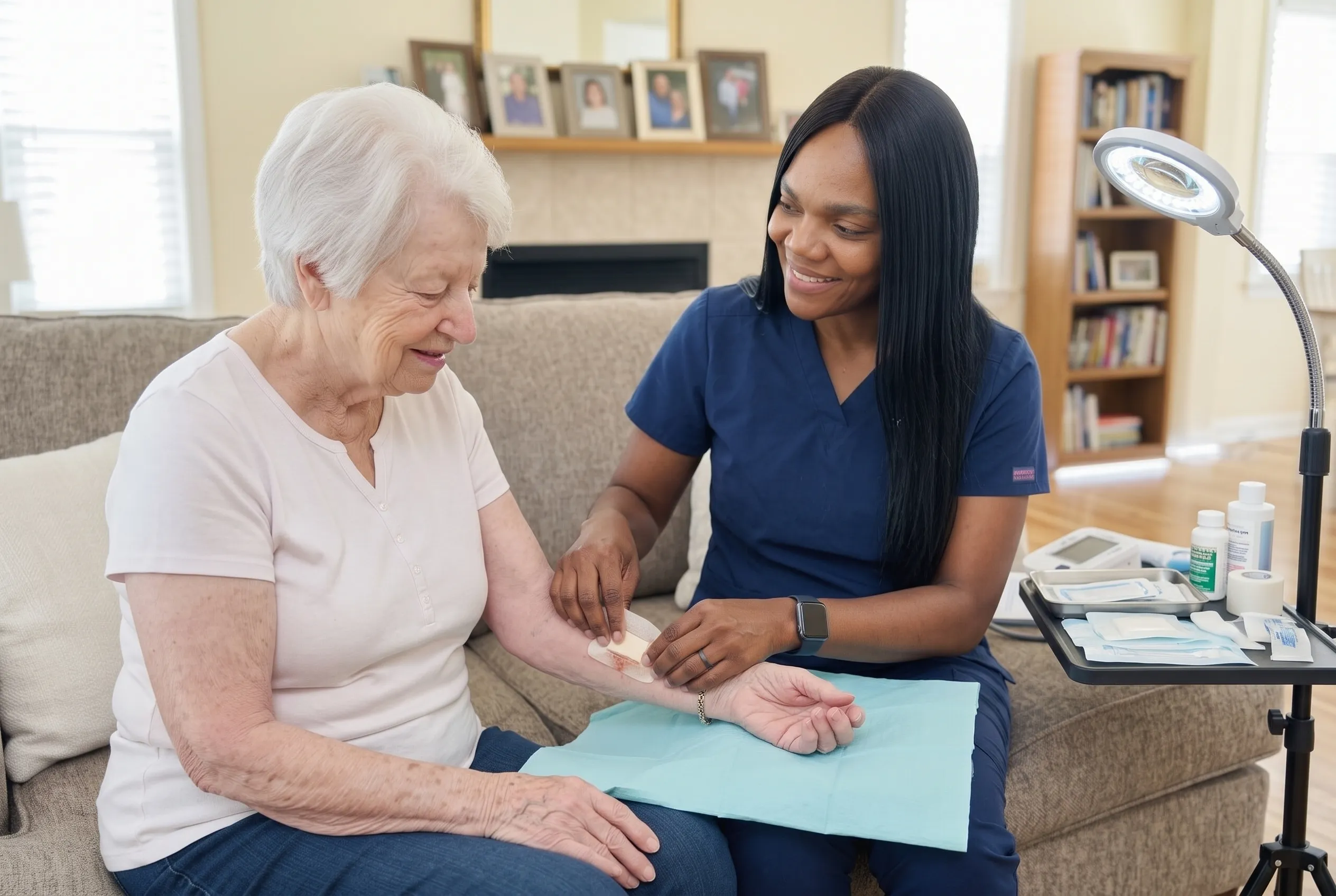
Our nurses assess the wound properly, manage dressings under sterile technique, and document what they find each visit. When a wound is not responding as it should, that shows up in the record — and we say so rather than continuing on quietly.
Consistency matters more than any single dressing. The same technique, the same assessment, every visit.
Signs a Wound Needs Professional Assessment
A wound being dressed at home is not the same as a wound being managed. These are the signs it needs clinical eyes.
It has not improved in two weeks
A wound that looks the same as it did a fortnight ago is not healing slowly — it is stalled, and something is preventing closure.
Redness, heat or swelling is spreading
Inflammation extending outward from the wound edge, warmth to the touch, or increasing pain, are early infection signs that need same-day attention.
There is new or changed discharge
Increasing exudate, a change in colour, or an odour, are all meaningful changes rather than cosmetic ones.
The person has diabetes
Diabetic wounds, particularly on the feet, deteriorate faster and with less warning than most people expect. Reduced sensation means pain does not provide the usual alarm.
The wound is over a bony area
Heels, sacrum, hips and elbows. Pressure injuries in these locations develop quickly in anyone with limited mobility.
Nobody is measuring it
If progress is being judged by memory and impression rather than measurement, there is no way to know whether the current plan is working.
What Specialized Wound Care Actually Involves
Good wound care is mostly consistency and honest documentation. These are the components of the service.
Clinical Wound Assessment and Staging
The first visit establishes what is actually being dealt with. The wound is assessed for type, depth, stage, size, wound bed condition, exudate level, edge appearance and the state of the surrounding skin.
Equally important is identifying why it is not healing. Poor circulation, pressure that has not been relieved, uncontrolled blood sugar, inadequate nutrition, moisture damage or an underlying infection — a dressing regimen that ignores the cause will not close the wound no matter how carefully it is applied.
The assessment produces a baseline measurement and a plan, both written down.
- Wound type identification and staging
- Length, width and depth measurement
- Wound bed and exudate assessment
- Periwound skin evaluation
- Identification of factors preventing healing
- Baseline documentation for progress comparison
Sterile Dressing Technique and Product Selection
Dressing changes are carried out under sterile technique, at the frequency the wound requires rather than the frequency that is convenient.
Product selection matters and changes as the wound does. A heavily exuding wound needs something different from a dry one; a wound that has developed granulation tissue needs something different from one that has not. Where a wound specialist or physician has specified products, we follow that direction.
- Sterile dressing changes
- Wound cleansing and debridement within scope
- Dressing product selection appropriate to wound phase
- Periwound skin protection
- Compression support where prescribed
- Adjustment of regimen as the wound changes
Pressure Injury Prevention
For anyone with limited mobility, preventing pressure injuries is far more valuable than treating them. A stage-one area of redness caught and offloaded resolves in days. The same site left another week can become a wound that takes months.
This means a repositioning schedule that is actually followed, regular inspection of the high-risk sites, appropriate support surfaces, and coaching whoever is providing daily care on what to look for.
- Risk assessment for pressure injury development
- Repositioning schedules and turning support
- Routine inspection of heels, sacrum, hips and elbows
- Support surface and cushion recommendations
- Moisture and incontinence-associated damage prevention
- Family and care aide education on early signs
Diabetic Foot and Lower Limb Ulcers
Diabetic foot ulcers deserve separate treatment because they behave differently. Reduced sensation means the person often cannot feel the damage. Reduced circulation means healing is slow. Infection can move from minor to serious in a matter of days.
Management centres on offloading pressure from the ulcer site, meticulous inspection of both feet at every visit, tight vigilance for infection, and immediate escalation when anything changes.
- Ulcer assessment and offloading
- Full foot inspection at every visit
- Footwear and pressure redistribution advice
- Infection vigilance and rapid escalation
- Coordination with diabetes and vascular care
- Education on daily foot checks between visits
Infection Recognition and Escalation
Wound infection in an older adult can present without the classic signs. There may be no fever. The first indication is sometimes confusion, a loss of appetite, or simply that the person is not themselves.
Our nurses assess for both local and systemic signs, document what they find, and escalate to the physician promptly. We would rather raise a concern that turns out to be nothing than miss the one that was not.
- Local infection sign assessment
- Systemic sign monitoring (temperature, confusion, appetite)
- Wound swabbing where directed
- Prompt physician escalation
- Antibiotic administration where prescribed
- Response monitoring once treatment begins
Documentation and Honest Progress Reporting
Every visit produces a measurement and a record. That record is what makes it possible to say, with evidence rather than impression, whether this wound is healing.
When it is not, we say so — to the family and to the physician — and we ask for the plan to be reviewed. Quietly continuing an ineffective regimen for another month is the most common failure in home wound care, and it is entirely avoidable.
- Measurement and documentation at every visit
- Photographic records where appropriate and consented
- Written progress summaries for family and physician
- Explicit flagging of stalled or deteriorating wounds
- Requests for specialist review when indicated
- Clear closure and discharge when healed
A wound that has been dressed carefully for six weeks and has not changed size has not been managed. It has been maintained.
Wounds We Commonly Manage
Each of these behaves differently and needs a different plan. Treating them all the same is how healing stalls.
Pressure Injuries
Prevention first — repositioning, offloading, skin inspection — then staged management where an injury has developed.
Diabetic Foot Ulcers
Careful offloading, infection vigilance and foot inspection, given how quickly these can deteriorate.
Surgical Incisions
Post-operative site monitoring, sterile dressing changes and early infection identification.
Chronic & Vascular Wounds
Venous and arterial ulcers and slow-healing skin tears, managed with consistent technique and clear documentation.
What Wound Care Visits Include
Every visit follows the same structure, so changes in the wound show up as changes in the record rather than differences in who happened to attend.
What Is Included:
What Happens at a Wound Care Visit
The same sequence every time, which is what makes change visible.
Preparation
Hand hygiene, sterile field set-up and preparation of the dressing products the plan specifies.
Dressing removal and inspection
The old dressing is removed and assessed — the amount and nature of exudate is itself clinical information.
Assessment and measurement
The wound bed, edges and surrounding skin are assessed, and the wound is measured against the baseline.
Cleansing and redressing
The wound is cleansed and redressed under sterile technique using the specified products.
Documentation and reporting
Findings are recorded, the family is updated, and anything concerning is escalated before the nurse leaves.
Wound Types We Manage
Each of these behaves differently and needs its own plan.
How Wound Care Is Managed
Initial Assessment
The wound is assessed, measured and documented, and the contributing factors are identified.
Care Plan & Products
A dressing regimen and visit schedule are set, in line with the treating physician's direction.
Consistent Visits
Dressing changes under sterile technique, with the wound reassessed and recorded each time.
Progress Review
Healing is reviewed against the record. If it has stalled, we escalate rather than repeat.
Why Families Trust Us With Wound Care
We measure, every visit
Progress is evidenced rather than estimated, which is the only way a stalled wound gets caught early.
Consistent sterile technique
The same standard regardless of which nurse attends. Inconsistency is itself a cause of poor healing.
We look for the cause
A dressing plan that ignores unrelieved pressure or uncontrolled blood sugar will not close the wound.
We say when it is not working
If a regimen has stalled, we escalate for review rather than quietly continuing it.
Prevention gets equal weight
For anyone with limited mobility, preventing the next pressure injury matters as much as treating the current one.
We work with your specialists
Where a wound clinic or vascular specialist is involved, we carry out their plan and report back to them.
Where We Provide This Service
OnPoint Nurse & Home Care serves families across Metro Vancouver. If you are just outside these communities, call us anyway — we will tell you honestly whether we can reach you reliably.
Wound Care: Common Questions
For most wound care we work in line with the direction of the treating physician or wound specialist, and we will ask about existing orders and any dressing products already prescribed. Families can still contact us first — we will help work out what is needed and coordinate from there.
Because it is measured and documented at each visit rather than judged from memory. That record is what makes a stalled wound visible early, and it is what we share with the physician when a plan needs to change.
Prevention is a large part of the work — repositioning schedules, offloading, skin inspection of the heels, sacrum and hips, and coaching family caregivers on what to watch for. For someone with limited mobility this is far more valuable than treatment after the fact.
This varies with the wound, the prescriber and what has already been arranged at discharge. Raise it at the care assessment and we will be clear about what we supply, what you source, and what is covered elsewhere.
We plan rosters for continuity wherever we can, because familiarity with a particular wound genuinely improves care — a nurse who saw it last week notices change faster. Where a different nurse attends, the documented measurements and photographs mean nothing is lost in the handover.
Yes, and this is a substantial part of the work. For a bed-bound client the plan covers repositioning, support surfaces, moisture management and inspection of all pressure points, not just the existing wound.
That is exactly what the documentation exists to catch. We escalate to the treating physician or wound specialist with the measurements that show the deterioration, and ask for the plan to be reviewed. We do not simply continue and hope.